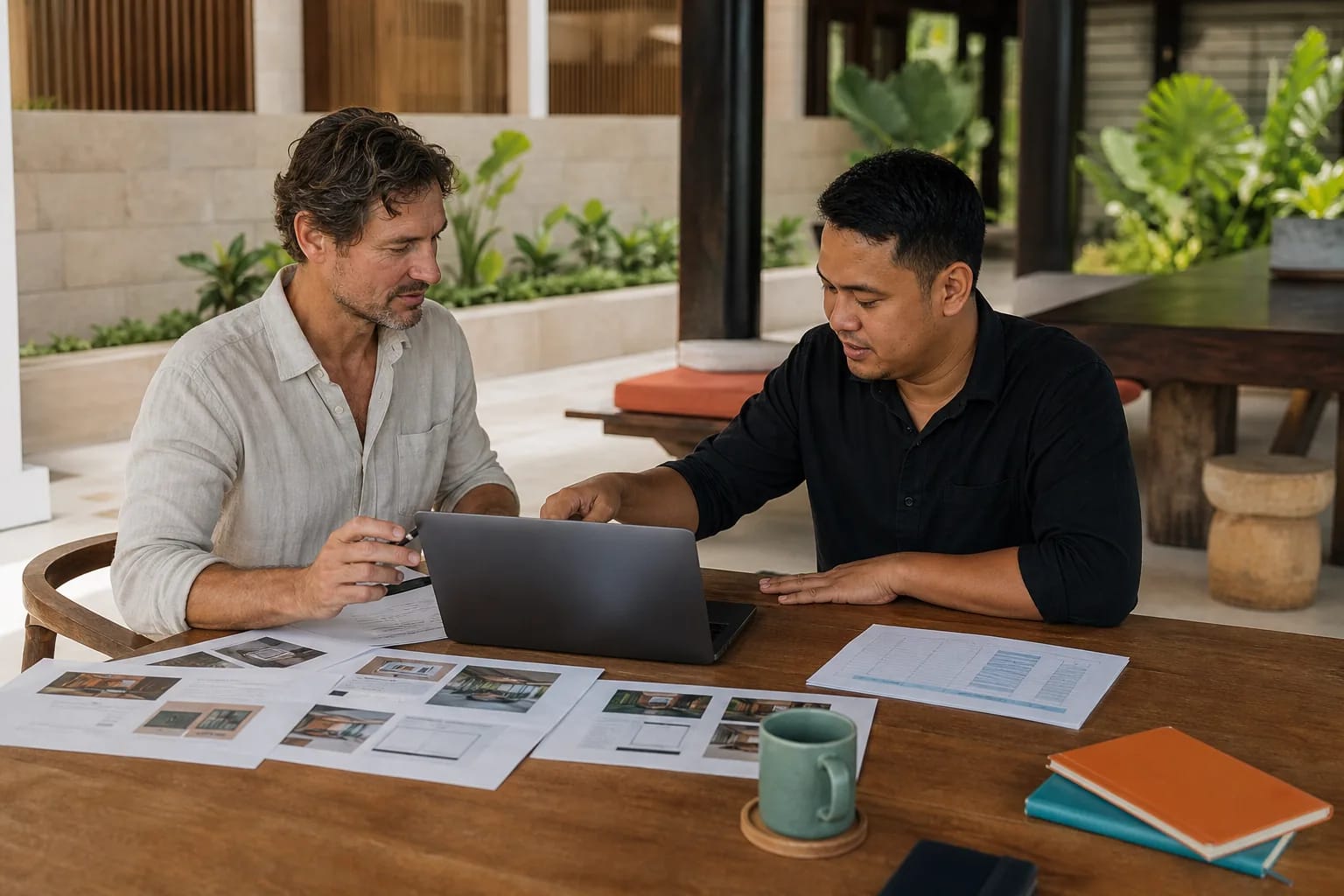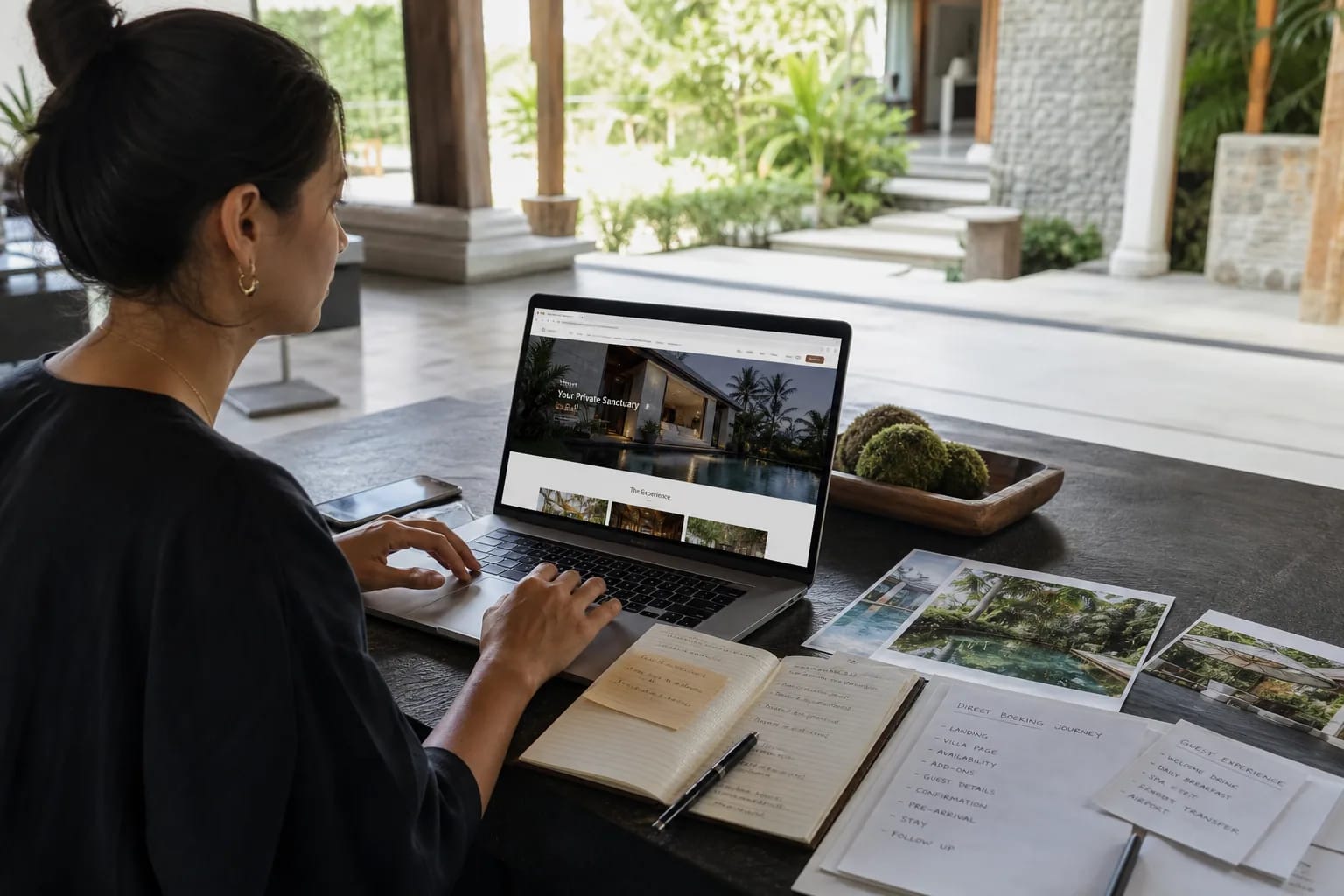

Starting or repositioning a business in Bali creates a particular kind of creative challenge. The brand may serve international guests, local customers, overseas investors, Indonesian partners, or all four at once. The website needs to feel globally credible while remaining useful in the local operating context. Content may need English-first clarity, Indonesian coordination, and production that can happen onsite.
A useful agency brief makes those realities visible before anyone discusses colors, page layouts, or campaign ideas. It gives the creative team enough context to recommend the right scope and gives the founder a way to compare proposals based on thinking, ownership, and delivery rather than surface style alone.
Start with the business situation in Bali
Explain why the business exists in Bali and how location affects the offer. A hospitality brand may depend on destination discovery and direct inquiries. A property business may need stronger qualification before viewings. A wellness or fitness concept may need recurring schedules, memberships, and community content. A product company may be based in Bali but sell internationally.
- What does the business sell, and which offer matters most in the next twelve months?
- Is the audience already in Bali, planning a visit, relocating, investing, or buying remotely?
- Which parts of the customer journey happen online and which require a local team?
- Does the business need English, Indonesian, or multilingual content and support?
- Which operating constraints are specific to the location, season, property, licensing, or team?
This context prevents a generic solution. A villa, restaurant, clinic, property developer, and software company can all need a website, but the trust signals, conversion paths, content needs, and maintenance responsibilities are completely different.
Define the audience by decision, not nationality
Foreign-owned businesses sometimes describe the audience only as expats, tourists, locals, or international clients. Those labels are too broad for useful design and copy decisions. Describe what the person is trying to decide and what blocks them from acting.
A visitor comparing two boutique stays needs proof of experience, location clarity, room details, policies, and an easy inquiry or booking path. A buyer considering property needs legal and specification clarity, credible visual documentation, and a qualified route to speak with the team. A founder hiring a remote partner needs to understand communication, ownership, payment, and delivery standards.
- What is the primary decision the audience needs to make?
- Which questions appear before they contact, book, visit, or buy?
- What would make the business feel risky or unclear?
- Which proof can the business show publicly and truthfully?
- What is the best next action for a qualified prospect?
Separate local production from remote delivery
Not every part of a creative project needs an onsite team. Strategy workshops, information architecture, copy reviews, interface design, development, QA, and handover can usually run through a structured remote workflow. Photography, video, location surveys, stakeholder sessions, and some launch activities may benefit from being onsite.
Ask the agency to state which activities are remote, which require location access, who coordinates production, and what travel or third-party costs are excluded. This avoids a common mismatch where a founder expects full local production while the proposal only covers design and development.
Make ownership and approvals explicit
Bali businesses often involve owners abroad, local operators, property teams, consultants, and external vendors. That makes decision ownership especially important. The brief should name one final approver and identify who provides operational, legal, technical, and content input.
- Who approves positioning, naming, visual direction, and website structure?
- Who provides accurate prices, policies, schedules, menus, inventory, and legal copy?
- Who controls the domain, hosting, social profiles, analytics, and booking tools?
- Who supplies photography and who approves image usage rights?
- Who will maintain the system after launch?
A clear approval map protects the timeline. It also prevents the creative team from making operational claims that the business has not verified.
Brief the whole system, then phase the work
A founder may need brand strategy, identity, a website, photography, social templates, paid campaign assets, booking integration, analytics, and ongoing support. The brief should mention the complete need, but the proposal does not have to ship everything at once.
A sensible first phase may clarify positioning and visual direction, then launch the core website and inquiry flow. A second phase can expand destination content, campaigns, automation, or product features after the primary system is stable. Phasing is stronger than hiding future needs until the middle of production.
Use a practical agency selection checklist
- The proposal explains the business problem and does not simply repeat the deliverable list.
- Contribution boundaries between strategy, design, development, content, and third parties are clear.
- The team can communicate and document decisions in the working language you need.
- Relevant work shows comparable decision journeys, not only a similar visual style.
- Timeline, review rounds, payment schedule, acceptance, IP transfer, and support are written down.
- The launch plan covers domains, analytics, forms, SEO, mobile QA, ownership, and handover.
- The agency is honest about evidence it cannot verify and does not invent outcomes.
A strong brief does not need to be long. It needs to make the business, audience, constraints, ownership, proof, budget, and launch decision visible. That is enough for a serious studio to recommend a practical path.
Apply the thinking